Mets Monday: Susanne

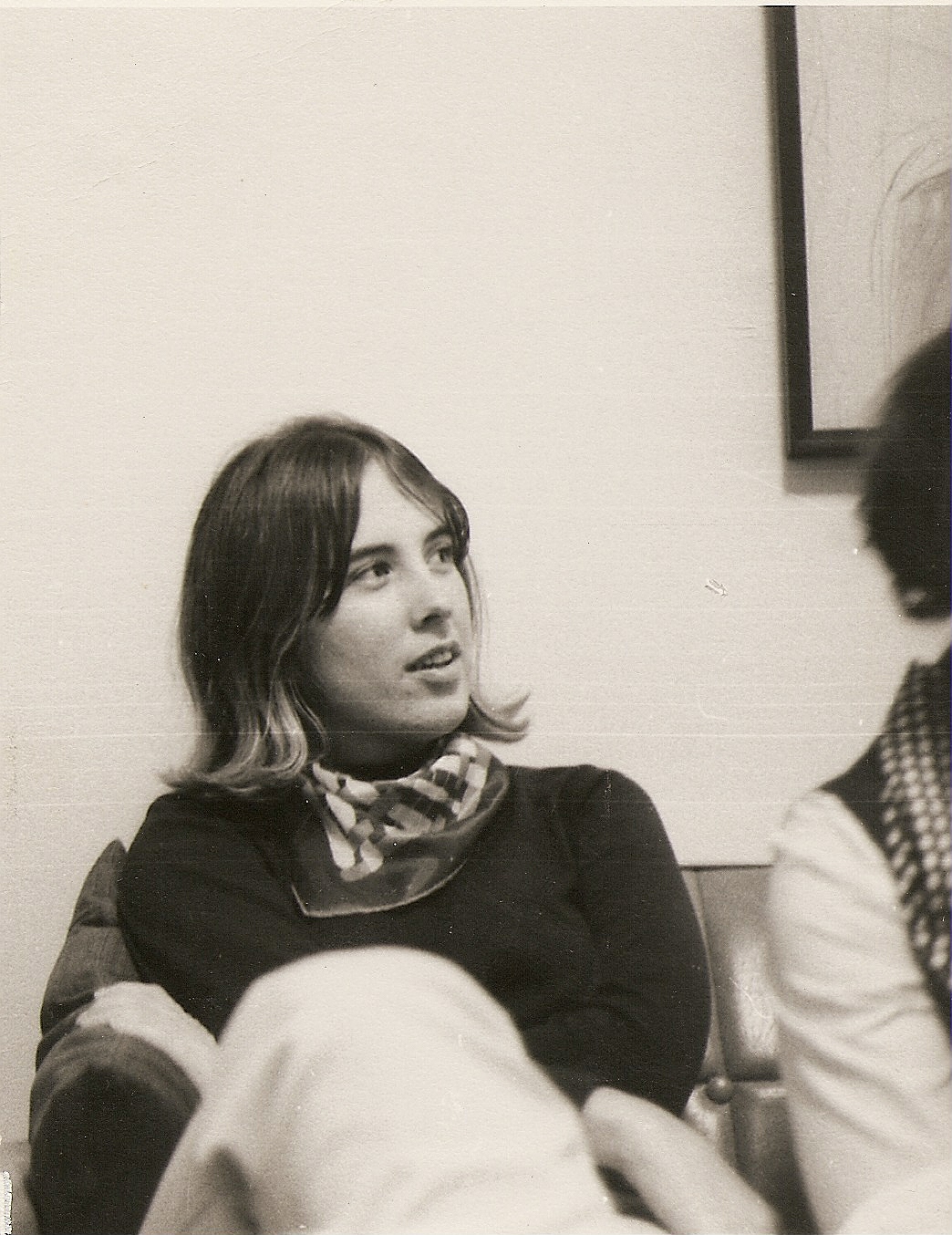
For today’s Mets Monday, let me introduce you to Susanne.  This is her Facebook page and her GoFundMe page.

When were you diagnosed (initially and then at stage 4, that is, if you were not stage 4 off the bat) and at what age?  What type of breast cancer (i.e., er+ or triple neg)?

I got the call that the biopsy came back positive for cancer on November 19, 2013. A couple weeks later, a PET scan and a second biopsy confirmed it was already metastatic to the liver. I’m ER/PR+, Her2-, invasive ductal carcinoma.

I was 39 years old.

What is life like as a metser? 

Not easy. Coping with this for me is a weird dichotomy of knowing I’m going to die, and hoping I’m going to live. I wrote a blog post a while back comparing it to a Hail Mary pass in a football game. You’ve got four seconds left on the clock, and you know you’re going to lose the game, but you still keep your butt parked on the bleachers because those Hail Mary passes can and do sometimes happen in those last few seconds.

I spend time getting things ready for my funeral, arranging a pre-pay insurance, writing the obituary, figuring out what hospice I want to use, that sort of thing. It feels like the more I plan and get out of the way, the freer I am to live my life and not worry about the details. I plan for my death so I can live.

I don’t want to die. Last night I had a sobbing, screaming panic about reality. I don’t want to die. I want to be able to stay here forever, I want to grow old with my wife, I want to see the first humans on Mars, I want to be a little old lady in a nursing home someday weirding out the CNAs and decorating my room with print outs of cat macros. I don’t want to die. It’s not fair. I have so much I wanted to do, so much I still want to do. It’s not fair.


Would you say the general public as a whole knows a lot about breast cancer?

No. They know it exists, but not much beyond that. There is awareness, but pink has normalized breast cancer to the extent that we no longer think of the dying. People are aware that breast cancer is a thing that happens, but nothing more. It’s assumed that people don’t die from breast cancer anymore, that there’s a cure now, it’s just an easy rite of passage of womanhood and it’s nothing to worry about anymore.

It’s not even a chronic, treatable disease. It’s killing us and it’s not slowed down in decades. It’s not a pink, pretty, sexy, easy disease with a free boob job. We’re dying. And the general public doesn’t really know nor care.

 What does “breast cancer awareness” mean to you?

It means making the public aware that pink ribbons don’t save lives, early detection doesn’t “cure” breast cancer, and that if you have breast cancer, you’re at a risk of metastasis, period. It’s not a disease that strikes older women; young women can get it too. It’s not even a woman’s disease, men get breast cancer, and the general public isn’t aware of this. There’s awareness of a generic concept of breast cancer, what we need now is awareness of the reality of this disease. That’s seriously lacking.


What type of misconceptions about breast cancer have you encountered?  Has anyone ever said something ignorant to you, obviously not knowing what stage 4 breast cancer is?

I’ve been told that breast cancer is a ‘rite of passage’. Someone expressed relief when they found out I had breast cancer, because it’s one of the “good ones”. I was told “your hair’s growing back, though. That’s good, right?” when I was trying to explain that I was never going to be out of treatment for metastatic breast cancer.

What makes you happy?

My wife, primarily. This has been incredibly hard on her, and we have so many regrets and fears and anger about having our years together robbed by this. She is everything to me. I fight so hard against this disease because I want to stay with her forever.

SusanneJennEngagement03

What advice would you give someone who truly does want to help the breast cancer community, especially those with metastatic breast cancer?

Pay attention to where the money goes. Don’t assume that because it’s a pink ribbon, it helps anyone. There’s a multi-million dollar merchandising industry being built on the backs of the dead and the dying. Be aware of how little goes to metastatic research. Be aware that you’re not “in the clear” at any magical point. A cure for metastasis is a cure for you too. Be aware that breast cancer is being normalized and sexualized and turned into a profit machine. You are worth more than your breasts. Be aware that mammograms are not perfect. For younger women, they’re often ineffectual due to the density of breast tissue. Even for older women, they might not always show up on scans.

We deserve more, we deserve better treatment, better awareness, better research into a valid, viable cure which will benefit all stages. The death rate from metastasis has not changed over the last 40 years. Early detection isn’t saving lives. We need funding into research, and we need people to be more aware of what their dollars support.

But perhaps the most important thing is to let us have our voice. Don’t hush us up or put us in the corner and give us bare bones acknowledgment because we’re your worst nightmare. We’re dying. Don’t begrudge us our remaining time to have a voice to speak out against this disease. Don’t tell us we’re wrong when we point out the stats and the funding. Don’t defend those who want us to be quiet. You might find yourself walking in our shoes. If you don’t want to be where we are, let us try to make history and give us enough awareness for a shot at finding a cure.

We’ll be quiet enough when we’re dead.

Please visit METAvivor and Live from Stage IV for more information.

Mets Monday: Carolyn

Everyone, please meet my friend, Carolyn.
20150315CFrayn20150315CFraynIMG_3333-01Final-680

When were you diagnosed and at what age?  What type of breast cancer (i.e., er+ or triple neg)?

On May 1st, 2009, I was diagnosed with stage III, er+ pr+ HER2+ (or triple positive), breast cancer at the age of 48, a few days before my youngest son turned sixteen. Due to the extreme growth of the breast tumour and other symptoms prior to the mastectomy it was speculated that I had inflammatory breast cancer but it was not noted as such.

On July 29th, 2012, at the age of 51, I was diagnosed with metastatic breast cancer (stage IV) after it was finally determined that the pain I had been in for many months was due to a breast cancer tumour destroying my C6 vertebra. This fact was missed by radiologist(s) in two CT scans until a neurologist found it while reviewing my older scans.

Inflammatory breast cancer hit my remaining breast in October, 2013. While the pathology remains triple positive, it can’t be said with certainty that it was due to metastasize or a new occurrence.

What is life like as a metser?

Difficult, joyful, exhausting, uncertain, some days more painful than others, some weeks I can’t manage the dishes or get off the couch, some days I can dance. For each person living with MBC there is a unique combination of conditions, variables, treatments, response, and progression of disease. I’ve yet to embrace the term “new normal.” There is nothing normal about life with metastatic cancer, new or otherwise.

For me, life happens in the spaces between my examinations, blood work, and IV infusions. Every three months I have CT scans to head, neck, chest and abdomen, which includes IV contrast injections. Every two months I have an echocardiogram to determine how my heart is coping with my infusions of Herceptin, which is much preferable over the many muga scans I had during my first year with that drug. Full body bone scans, MRI’s, and x-rays are intermittent.

While life happens I’m plagued with constant neck spasms which cause my head to move to the side repeatedly during the day, a distended, firm carotid artery, painful cramping in my chest, neck and esophagus, and an uncomfortable, often painful, upper spine due to spine surgery and the titanium cage, rods and screws. When I yawn, I can’t swallow or breathe well until I massage a neck cramp away.

The treatments and surgeries I’ve undergone over the last seven years have taken a toll. I have peripheral neuropathy, my extremities are numb full time. I’m prone to trip as I can’t feel my toes. My hands wear invisible gloves that I can’t remove. Fibrosis (scarring) and adhesions are also a pain in the neck, chest, ribs, back, shoulders, etc. Two of my bottom teeth are hanging on by a thread, and some of my upper middle gum came off during my neck radiation. There are other ongoing and permanent side effects as well, including cognitive decline.

My favourite moments: Reclining in my lazy boy to relieve symptoms while chatting with my youngest son and listening to his favourite music. When my two older sons and daughter-in-law come to call. Tea with my systir and niece. Laughing with my family during our visits, dinners and events. Tending and loving my eight month old grandson, a joy I didn’t think I’d experience once diagnosed with metastatic breast cancer. Walking with my friend and her dog.

When my sister, brother, sister-in-law, and I get together with our children and our Mom, breast cancer is no longer so very present in my mind. It took me almost six years to get to this point.

The most disconcerting issue I find is the uncertainty. We just don’t know how long we have left to live after a metastatic breast cancer diagnosis, when we will progress, what – or if – treatments will be available when we do, nor what type of death we can expect. We could live the median of two to three years, or we could be an outlier, that infinitesimal percentage of people who live 8, 10 years, or longer. It messes with your mind, your sleep, your resolve.

What type of misconceptions about breast cancer have you encountered?  Has anyone ever said something ignorant to you, obviously not knowing what stage 4 breast cancer is?

When you have breast cancer, you are never cured, no matter what stage you were originally diagnosed. There is no cure. If you were not diagnosed with MBC from the start, Metastatic (aka stage IV) breast cancer can become your reality at any time; a year, a few years, or many years after your original early stage diagnosis. I have learned that many people, with or without breast cancer, are not aware of this fact.

I’m continually told, “you beat it once, you’ll beat it this time!” No. I will not. Nor did I beat it the first time. It is not under my control. We manage it, while it grows in our bodies and attacks our bones, our other organs, our brains, until we can’t manage it any longer.

I find it is an innate human desire, for most people, to comfort and somewhat coddle those who are going through early stage breast cancer. While encouragement, support, and hope is most certainly warranted and necessary, I feel that the hard truths must be given as well. The misconception being, that we need to be coddled. I don’t believe we do.

One day at the grocery store a young man at the check out asked me how I was. I said that I was fine, that particular day I was telling the truth even though I was in pain. He then went on to inform me that he had a cold, his girlfriend left him, and he hated work. I don’t know what possessed me, but I asked him, are you dying? He looked a little stunned, and didn’t respond, no doubt thinking I was off my rocker. I couldn’t believe I had asked that, perhaps it was due to large pink sign above his till, and the many products with pink ribbons that surrounded me. I then explained that I had metastatic breast cancer, stage IV, and that it was terminal, it will kill me.

He said, “No one dies of breast cancer anymore, my Mom died of it, but they fixed it.”

My heart sank, for more than one reason.

How do you think the Pink Ribbon culture has harmed those with stage 4?

The Pink Ribbon culture has overwhelmed us with profit minded individuals and corporations who claim to be altruistic in their goals. I’m sure most people are quite sick of pink and zone out when pink is shoved in their face, not just during Pinktober, but all year long. I know I am. Quite sick of it. But breast cancers association with pink is ingrained in our lives and I doubt it will be going anywhere soon, and I’d like to see the focus on donations and fundraising shift almost fully towards research and education.

Mainstream media could help change direction, but I’m afraid that with the pink, comes the desire to show the happy survivor, the hope and the dreams, rather than the approximate 30% of us with breast cancer who will become metastatic and die. This attitude has been slightly changing of late, let’s hope the momentum continues.

The pink ribbon, originally salmon coloured, was introduced to create a much needed awareness of breast cancer. And while breast cancer awareness is still important in many countries, awareness of metastatic breast cancer is sorely lacking in all. The messages from these awareness campaigns have sanitized our disease, not to mention partially obliterated the reason behind the original intent of the pink ribbon movement. Pink ribbon campaigns in the marketplace are quite lucrative, a great way to bring in consumer dollars for any end product, from toiletries and pink hammers to pornography. But where are those funds going? We need donations to count, research is key.

Recently the Susan G. Komen corporation put out a new campaign using a woman with stage IV breast cancer as their highlighted warrior. I’m encouraged that they are no longer hiding stage IV in the back room, however, the message is wrong. Again.

“Don’t let breast cancer win.”

No one living with metastatic breast cancer has a choice in the matter, we aren’t losers, but breast cancer WILL kill us. The statement on Komen’s stage IV survivor ad, as well as others I’ve read in various promotions, place the blame directly at those of us living with this disease. It’s our fault if we die, we didn’t fight hard enough. That’s the message. It’s insulting, insensitive, inappropriate, and complete bullshit.

In the US the message that seems most prevalent in the pink ribbon campaigns is that early detection saves lives. The truth is, early detection does not prevent metastases. Plain and simple. If you have early stage breast cancer, it can come back, metastasize, turn your life upside down and eventually cause death. The market seems saturated with misguided information and greed, the focus has been corrupted, change is needed.

I personally stay away from anything that says “Komen.” Their message, their million dollar plus legal fights to keep “for the cure” to themselves, and the questionably high salary that the their founder takes home, are all concerning. It is my personal opinion that they are the bully foundation for what is known as the bully cancer. And why are we known as the bully cancer? Probably due to the pink ribbon culture.

There are other organizations that direct a much greater percentage of funds towards research verses awareness. The Canadian Breast Cancer Foundation is one of those organizations, and is transparent regarding fund allocation.

METAvivor‘s mission is quite clear, 100% of all donations goes towards metastatic research. Please check them out if you want more information.

Breast cancer doesn’t kill you until it metastasizes, yet stage IV seems mostly ignored within the Pink Ribbon culture. At least that’s how I felt a few years ago and I don’t feel all that differently right now. I wrote about my views in two posts, starting with Fifty Shades of Pink, back in 2013. That post will link to the next, my rant. At that time, I did not think I’d still be alive come 2015.

No amount of positive thinking is going to change the outcome of metastatic breast cancer. Research will.

What advice would you give someone who truly does want to help the breast cancer community, especially those with metastatic breast cancer?

Educate yourself, share the reality of breast cancer, share the truth of metastatic breast cancer, and don’t be afraid to talk with those of us living with MBC.

Be mindful that many of us, especially those with mets, don’t care about saving the ta-ta’s, boobie’s, the girls. Many of us don’t even have breasts. We care about saving lives. Life goes on after your breasts are amputated. We want parents to raise their children and watch their children grow, couples to enjoy the years together that they hoped for. We want to enjoy our lives and live without debilitating side effects, no matter our ages.

Many of us are insulted by the facebook games and various campaigns that go around claiming they are spreading awareness of breast cancer. One example was the popular no-bra day. I feel those games are trivializing our condition, and continuing to sexualize our disease. Every day is no-bra for some of us. This type of activity is not helpful. Those who play the games, and those who see them, are most assuredly fully aware of breast cancer.

Please visit these organizations for information on breast cancer and MBC:

Canadian Breast Cancer Foundation
Breast Cancer Consortium
BCSM (Breast Cancer Social Media) Community
LBBC (Living Beyond Breast Cancer)
MBCN (Metastatic Breast Cancer Network)
METAvivor

How can someone diagnosed with early stage breast cancer be a good ally to those with stage 4?

Once immersed in life with metastatic breast cancer I quickly became knowledgable with respect to it’s randomness and ultimate end. I then realized that when I was diagnosed and dealing with stage III breast cancer I didn’t have a clue about metastatic breast cancer. I had pamphlets, and one book that my original oncologist contributed to, which I read, though I’m not sure the very real possibility of becoming metastatic sunk in. I’m going to be just fine! I’ve had my surgery and treatments, I’m outta here!

I’d like to think that landscape is changing, people with early stage disease are better informed, personally informed, in your face informed, and not just handed a few things to read. But, it’s probably more likely that because I’m now fully immersed, I am fully aware, and because those I write and talk with are fully aware, I often assume others are as well.

We have work to do. Education is so important. The reality is hard to swallow but necessary to accept. That’s how change happens.

Keep in mind that those of us who were not diagnosed with stage IV from the start, once walked in your shoes. Living with stage IV, metastatic breast cancer, is in some ways similar to going through the various treatments for early stage breast cancer, two differences being that our treatments are forever, and our condition worsens until breast cancer kills us. There are obviously other differences, but hopefully my point makes sense.

Please remember that your breast cancer can come back at any time, I’m not trying to be a fear monger and certainly don’t wish you to live with constant dread, but I feel it’s important to remain realistic and vigilant.

Metastatic breast cancer is a widespread global killer of both sexes, young, old, and in between. In 2012, 524865 women and 3324 men died of metastatic breast cancer. Many MBC deaths go unreported as such, therefore the true numbers are higher.

If you wish to help us be heard, educate yourself about Metastatic Breast Cancer (stage IV), don’t pretend it doesn’t exist, and help us spread it’s reality.

Change is on the horizon! I might even live to see some of it. That’d be cool.

I’d like to thank Lara Huffman for allowing me this opportunity to share my views and concerns with respect to metastatic breast cancer.

You can read my story, rants, and musings at Art of Breast Cancer and if you are so inclined, follow me on Facebook, twitter, google+, and pinterest.

Fare thee well, Lisa

A prominent voice in the breast cancer community, Lisa Bonchek Adams, died of metastatic breast cancer last week.  I followed her on Twitter and Facebook, and I read as much of her writing as I could.   She was initially diagnosed with early stage breast cancer.  She underwent all the treatment for early stage breast cancer, including having an oopherectomy.    Lisa writes about that here.   She did everything she was supposed to do treatment-wise, yet she still fell into the 30 percent category of those whose breast cancer recurred stage 4.

As someone with early stage breast cancer, her story is bone-chilling, frightening to me.   My biggest fear used to be developing breast cancer like my mom, and that’s happened.  My biggest fear now: my breast cancer coming back stage 4, and I die at a young age just like her.  Stage 4 is the nightmare.  It’s my nightmare, and at the same time, it’s made me beyond appreciative for my current good bill of health.  I feel a heightened sense of panic and anxiety every time I visit with my oncologist and that won’t ever change.

I won’t turn my back and pretend that metastatic breast cancer doesn’t exist because for so many, my nightmare is their reality.  I have come to accept that this may happen to me, but I won’t ignore the fact that approximately 40,000 die of this disease every year.   I won’t ignore those like Lisa, and so many others who died of a disease packaged up in a prettysexycool pink exterior.

Lisa did not subscribe to the Pink Ribbon Culture.  She was critical of Komen.  She railed against the Pink Ribbon Culture with open, honest talk about the disease, and its effects.  She talked openly with her three children about her disease and its ultimate outcome.  Since I barely remember my mother because my parents shielded me from the last six months of her life, I appreciated Lisa’s honesty with her children.  I wished my parents hadn’t shielded me so much, then perhaps I would have a memory of my own mother.

Lisa also didn’t subscribe to the cancer pep talks, and in a May 2013 Salon article, she commented:

“I don’t need to be told to fight the good fight to beat it or the key is to just stay strong or that it’s mind over matter.  You force me to assert my knowledge, insist upon my diagnosis, explain the desperate nature of my disease, spend my time defending my sentence.”

After her death, a friend of mine with Stage 4 breast cancer posted something Lisa wrote entitled “When I Die” on Facebook.  Here’s a snippet from that post:

Don’t try to comfort my children by telling them I’m an angel watching over them from heaven or that I’m in a better place:

There is no better place to me than being here with them.

They have learned about grief and they will learn more.

That is part of it all.

(For all those who believe that a positive attitude is all you need to beat breast cancer, how would a positive attitude ever trump a parent’s desire to see their children grow up?  Riddle me that, Batman.)

While I often refer to my mother as my guardian angel, the second line really punched me in the gut: “There is no better place to me than being here with them.”  Oh my heart, it hurts.  As a woman whose had breast cancer and the daughter of a woman who died of the same disease, I gained insight into what my mom had to have been feeling as she knew her time was limited.

If you, dear Get Up Swinging readers, want to help those with metastatic breast cancer and honor Lisa’s memory, then you can do so here.

Lisa didn’t lose her battle or a years-long fight.  She died of metastatic breast cancer at the age of 45.  The metastatic breast cancer community lost a powerful voice and advocate, but her words will live on.

Mets Monday: Susan

Susan

When were you diagnosed and at what age?  What type of breast cancer ?

I was diagnosed in August 28th 2013 after a PET/CT scan. I had just turned 43 years.  My cancer is ER/PR+ HER2-. I don’t have the BRCA mutation.20150223315713253

What is life like as a metser?  

My life in a nutshell is all about managing my pain. It’s a full-time job. I take Exemestane, it causes joint pain. However, for me, that pain has caused inflammation in my joints so I’ve had to be on steroids for my knees and I just had injections in the Bursa’s of my hips. Then there is the radiation damage to my right ribs. The lesion caused pain and I had it radiated. In doing that I now have nerve damage and take Cymbalta to help with that. To further complicate things, I have now fractured that particular rib and the pain of that coupled with nerve pain makes it much more than a fractured rib. The pain makes it difficult to breath and move in certain ways. I also take morphine – long and short acting and Tylenol.

Aside from the pain, I try to concentrate on making memories for and with my son so when he looks back he can recall happy times and events and not a ‘sick’ mom.

What type of misconceptions about breast cancer have you encountered? 

I’ve encountered many misconceptions when it comes to breast cancer. The biggest one is that it’s the better” cancer to have and its curable. Curable, it is most definitely not and there is NO such thing as ‘good’ cancer. It all sucks. Personally, the biggest misconception I’ve had to deal with is people saying to me: “You look great!  You don’t look sick at all!!”  I’m not your stereotypical cancer patient. I’ve not lost my hair and I’ve gained weight from meds, not lost as some do. To look at me, you would never know I was dealing with a terminal illness. But on the inside I’m a wreck. Riddled with pain and exhaustion.

The Pink Ribbon has done such a disservice to the entire Breast Cancer community. Instead of educating everyone on the fact that metastatic breast cancer is possible for 30% of those diagnosed early. By cloaking breast cancer in a cloud of “check your breasts, have a mammogram, get your cancer diagnosed early, make it to 5 years and you have been cured forever.” That is simply untrue and some women have a false sense of hope and are very defensive when the metastatic community comes around. Stage 4 people are breast cancer’s dirty little secret. Which is why there is such a lack in funding for research. If you don’t acknowledge it and continue to deny then it’s not happening.

What advice would you give someone who truly does want to help the breast cancer community, especially those with metastatic breast cancer?

For anyone that wants to help the breast cancer community, I would recommend getting educated by other groups aside from Komen. Organizations like: Deadline 2020, METAvivor and LBBC have good information and are pro-research. Understanding that research is the key to a cure and not running races is a huge step in the right direction.

How can someone diagnosed with early stage breast cancer be a good ally to those with stage 4?

Being an ally to metastatic patients means understanding and educating yourself about ALL the breast cancers out there. Everyone’s breast cancer is individual. It’s not like getting the flu and everyone basically has the same symptoms. My ER/PR+ HER2- cancer will be different from someone else’s triple negative. Everyone has different treatment. It’s not one size fits all. No matter what kind of breast cancer someone has everyone should support and get behind research. Research helps us all.

Breast cancer is NOT a game

I generally don’t participate in these BUT… Haha, you should not have liked or commented. Now you have to pick from one of these below and post it as your status. This is THE 2015 BREAST CANCER AWARENESS game. Don’t be a spoil sport, pick your poison from one of these and change your status, 1) Damn diarrhea 2) Just used my boobs to get out of a speeding ticket 3) How do you get rid of foot fungus 4) No toilet paper, goodbye socks. 5) I think I’m in love with someone, what should I do? 6) I’ve decided to stop wearing underwear 7) it’s confirmed, I’m going to be a Mommy/Daddy! 8)Just won $900 on a scratch card. 9) Its final, we’re moving to Mexico to be beach bums! Post with no explanations.

Oh dear goodness.  Not this bullshit again.  Why is this still a thing?   Why hasn’t this “game” been killed in a fire? You know what I want to do whenever I see this form of slactivism in my social media news feeds.

hojkokfijt0ujov9lobq

Breast cancer is not a game.  Repeat after me: it is not a game.  It certainly is not a shitty game which tells you absolutely nothing about breast cancer.  For real, what does that game above tell you about breast cancer?  After reading that, did you learn anything about breast cancer that you didn’t know before?  I mean, it’s telling you there’s awareness going on.  What are you aware of now that you weren’t before?  If you didn’t know that breast cancer existed before coming across the 2015 BREAST CANCER AWARENESS GAME, then please give me the address of the rock you were living under.  Were you living in a land free of pink ribbons?  (Take me there!)

You know what I think whenever I see this pop up in any of my news feed: you could care less about breast cancer, and I need to unfriend you right the hell now.  I’m not even kidding.  If anyone who knows me  and what I have gone through (i.e., lumpectomy, chemo, radiation and double mastectomy) can participate in such a game and not realize how demeaning and offensive this is to anyone going through breast cancer treatment.  I never saw what I went through as some cutesy game, and I certainly don’t view my mother’s death from this disease as LOL.

Lisa Bonchek Adams, who has stage 4 breast cancer, wrote this spot-on piece entitled “Breast cancer is (still) not a Facebook game”:

The above instructions are not awareness. This is offensive. Breast cancer is not a joke, awareness does not come from sharing the color of your underwear or your marital status (the whole “tee-hee, wink-wink” attitude adds to my disgust). Even if it ended up on TV, that still would not be educating people about breast cancer they didn’t know before. All it does is show the world that lots of people are willing to post silly things as their status updates.

She also wrote:

Education underlies awareness. To even call something a game and honestly believe it’s doing anything to help any aspect of this disease is delusional.

While you’re playing games, (mostly) women are dying of metastatic breast cancer.   We have been running and racing for a cure that has not happened.   Where’s the cure?  The below infographic is proof of how little most people know, despite all this awareness.

Metastatic_Breast_Cancer__Infographic

50 FREAKING PERCENT believe that breast cancer progresses because patients either did not take the “right” treatment or preventative treatments.  Are you kidding me?   That is unacceptable.  Is this why we treat those living and dying of metastatic breast cancer as some dirty little secret nobody should talk about because most people think they brought it upon themselves?   That is so far from the truth that it should be filed under fiction.

Did you know that 30 percent of those diagnosed with early stage breast cancer have a metastatic breast cancer, i.e., the breast cancer that kills?  WAS THAT FACT RELAYED TO YOU WHILE YOU’RE PLAYING THE GAME?

Awareness does not save lives.  It doesn’t.  Despite recent media articles telling you that breast cancer rates have dropped, don’t believe the screaming headlines.

Frankly, I’m tired breast cancer being portrayed as the feel good cancer and being held up as a shining example for early detection which works sometimes or most times but not all the time and that part of the messaging is conveniently left out of every discussion about early detection. It’s buzzkill, it detracts from the message that mammograms are helping save lives. Mammograms are detecting cancer earlier and earlier thanks to the constant improvements being made in the imagine, but early detection is just that. Early Detection. Early detection is not a guarantee.

If you or anyone really want to help, tell these Facebook game players to sign this petition.   “I ask that Komen commit at least 50% of total donations to medical research and innovation rather than to awareness and education. I request all other breast cancer non-profits do the same.”  Donate to Metavivor.  Do something meaningful.

Just don’t play these games.  Please.  Can you really play a game making light of the deaths of so many?

Mom10

Positivity Police

I will be the first to admit that when it comes to cancer, I am probably not the most positive person.  I never viewed my two years of treatment as some “journey,” and I absolutely despise those who call cancer a “gift.”   (If you think cancer is a “gift,” then you were on the receiving end of some pretty crappy gifts in your life.)  I would go as far as to say I’m a cynic and realist about cancer, but not a Debbie Downer.

debbie-downer

That’s not me, I swear!

The pressure to remain positive during cancer treatment starts at the very moment you are diagnosed, and you are relaying this information to friends and family.  I tried my absolute hardest to maintain this mindset during treatment, but it didn’t last long. Maybe a couple of months?  When you’re dealing with stress from treatment on top of family relationships being tested and broken, it takes a toll.  You can only smile so much as you endure chemotherapy and bad news after bad news.

Forced-Smile

Author Barbara Ehrenreich (who also had breast cancer) wrote:

The effect of all this positive thinking is to transform breast cancer into a rite of passage – not an injustice or a tragedy to rail against but a normal marker in the life cycle, like menopause or grandmotherhood. Everything in mainstream breast cancer culture serves, no doubt inadvertently, to tame and normalise the disease. Indeed, you can defy the inevitable disfigurements and come out, on the survivor side, actually prettier, sexier, more feminine. In the lore of the disease – shared with me by oncology nurses as well as by survivors – chemotherapy smoothes and tightens the skin and helps you lose weight, and when your hair comes back it will be fuller, softer, easier to control, and perhaps a surprising new colour. These may be myths, but for those willing to get with the prevailing programme, opportunities for self-improvement abound. Breast cancer is a chance for creative self-transformation – a makeover opportunity, in fact.

When asked what would he say to someone who credits positive thinking to their survival, psychologist Richard Sloan commented in a November 27, 2011 CBSNews.com article: “I’d say, I’m very happy for you, I’m glad you survived. But for every one of you who said you were going to fight your way out of it, there are probably dozens of people who said precisely the same thing and didn’t survive.  One person’s anecdote doesn’t make evidence.”

Exactly!  Those who died of metastatic cancer weren’t all negative Nancys or Debbie Downers.  A lot of lovely people with amazing attitudes died of cancer.

I would hope that anybody going through cancer would feel allowed to feel whatever they are feeling.  You should silence those voices and pressure around you insisting that you must remain positive, and be authentic to yourself.  If you’re feeling down, that’s okay.  If you’re feeling awesome because it’s an off-chemo week, then masel tov!  I don’t want anyone to put on a fake smile and pretend to be hunky dory if you’re sad.  It’s okay – cancer sucks.  If it was easy, then, well… who the heck ever said cancer was easy?

A fellow blogger and I discussed our hesitation to even write about the pressure to remain positive during and after treatment for a very messed up reason.  What if we voice these not-so-popular opinions and then later have our cancers recur, then will people think, “Yeah, she brought this upon herself by being so negative.”  If my cancer recurs next year or 10 years from now, am I going to be blamed for it because I didn’t don a pink boa and a punny T-shirt about breasts?

If someone you love is going through cancer and you’re not sure how to act or speak to them about the disease, just know your audience.  If that person loves the battle metaphors and fighting persona, then go nuts.  There are a lot of merchandise you can buy for them.  Boy, is there ever.

However, if your loved one is someone like me, someone who talks about his/her experiences candidly and without putting on that Cancer Brave Face, then just listen to them.  Empathize.  You don’t have to put on your brave face, either.  It’s okay to just hang out with someone.  During my treatment, I became super skilled at just hanging out because I couldn’t really do much else.  Be there for your friend and family, and never put your need for them to act like everything is fine because cancer scares the shit out of you over their own well being.

Whatever you’re feeling, it’s okay.

Stories

Recently, I began asking my dad more about my mother’s family.

Even though my mother has been gone since 1987, my dad is still an amazing source whenever I’m craving insight into her family.   He has been and still is the go to guy when I want to know anything about my grandparents or mother.  I’m pretty sure if my dad ever took piñata form, and you knocked him open, nothing but stories would come falling out.  I may look exactly like my mother, but my personality is straight up from my dad.

I have written before about my grandmothers.  This time around, I wanted to dig a little deeper about the one who I barely remember or who I think I barely remember.  (Does remembering a deep smoker’s voice telling me to give her “some sugar” count as a memory?)  Who is my mother’s mother?

When I googled my grandmother’s name, I found out my great grandparents name, which I never knew before.  But I don’t want to just create a family tree, look at all the filled-in names, say, “I’m done,” and then pat myself on the back for doing such a splendid job.  I want to get to know these names, not just where they place in my family tree.

During my great family google, I even uncovered a great aunt’s name, which I had never heard (or maybe I had, but it had been so long that I had forgotten).  According to my dad, my great grandfather and his family arrived in Texas in a cover wagon.  My mom’s cousin told me that my great aunt was a loving woman who greeted beloved family members by kissing them and exclaiming, “I love you!”  Another cousin of my mom’s said that my mother made the best lasagna.

See, I did not know that.

My grandmother died when I was 3 years old of lung cancer, and my mother died when I was 7.  I’m not that close to my mother’s siblings since I have never lived in the same state as any of them.  I have these family members out there who I don’t know, and who don’t know me.  Sadly, I have these family members I will never know.

Every time I look at this photograph of me sitting next to my grandmother, where my face is so done up with so much makeup that I looked like a toddler beauty queen, it makes me laugh.  Man, she must have had a good time painting my little toddler face.   I wonder if she would have found my anti-girly girl personality during my teen-aged years to be unbecoming and would have had talks with me about how I could pretty up my appearance.

While pictures are great, stories are something else.  When I hear these stories, no matter how insignificant they might be to the story teller, my grandmother and mother come alive.  They become real people.  Any stories about these women slowly fill in giant holes in my heart that cancer created.  I don’t care if the stories paint either woman in a less than flattering light.  They were real life humans once, before cancer came along, and they had flaws just like everyone else.

I am third generation cancer.  I am sad that I never got to hear stories from my grandmother about what my mom was like as a child.  I have certainly never dreamed of shopping for wedding gowns since my mother and grandmother are no longer here.  Cancer took them from me, but lately, when I learn more about them, they are more than the disease that took their lives.  They are my family, and I know that I come from a line of women who will always be more powerful than cancer.

Wedding2

Thyroid Cancer during Breast Cancer

“Ms. Huffman, have you noticed a fullness in your neck?”

This was the question I heard from my primary care physician, who I had gone to see for a mammogram referral, which would eventually lead to my breast cancer diagnosis.

“Yes, but I had a radioactive treatment several years ago to treat a goiter on my thyroid.  I had thought the treatment took care of that.”  Women on both sides of my family have had problems with their thyroid; my mom had her thyroid removed when she was 16, one of her cousins had thyroid cancer, and one of my aunts had thyroid cancer.

“Hmmm, I believe that may not be the case.  Regardless, you need to see a specialist and have this checked out further.”

For a period of almost two months prior to my breast diagnosis, I had numerous appointments for scans, biopsies and specialist consultations for both my thyroid and breasts.  My bosses, bless their hearts, let me have flexible hours at work to make up for the plethora of appointments.   If they hadn’t been so accommodating and helpful during that initial period, I surely would have lost my mind.

I was diagnosed with early stage breast cancer in late September 2010.   Several weeks afterwards, I met up with an endocrinologist to discuss the results of my thyroid biopsy.  He informed me that there was a significant chance I had thyroid cancer, too, and I needed to have my thyroid removed.

Being told that you may have cancer while you already have cancer, it’s surreal, to say the least.  My inner monologue was basically: “Hahahahahahahahahahahaha.”

Since the breast cancer was considered the biggest threat, treatment for those particular rogue cells took priority.  However, a month after I was done with chemotherapy, it was time for the thyroid to be exorcised . . . I mean, removed.

After the full thyroidectomy, I was a sight to be seen: bald, greyish pallor and sporting a giant neck wound.  The first night after my surgery, I fainted in the bathroom and woke up surrounded by unfamiliar nurses and doctors all saying my name really loudly.   Apparently, as I was falling down, I had hit my head and the nurse’s aide (who I had insisted that she stay outside the bathroom because “I’m an adult and don’t need help in the bathroom”) caught me as I crumpled to the floor.

It was a “fun” night after that, and I was sprung from the hospital on my 31st birthday.  Happy birthday to me!

It wasn’t easy trying to get my thyroid hormones leveled while dealing with radiation for breast cancer.  I felt tired in ways I didn’t think were possible.   Since I no longer had a thyroid, I take Synthryoid every day and will do so for the rest of my life.  I never wanted to be on a medication for the rest of my life before my thyroidectomy, but now that I am, I don’t care in the absolute slightest.  Given how much trouble my thyroid caused me in my 20s (i.e., untreated hyperthyroidism for years), my only regret is that I didn’t have it removed sooner.  When your thyroid is off, everything about you and how you feel is off.

Symptoms of hyperthyroidism (which I checked off most of them):

  • Difficulty concentrating
  • Fatigue
  • Frequent bowel movements
  • Goiter (visibly enlarged thyroid gland) or thyroid nodules
  • Hand tremor
  • Heat intolerance
  • Increased appetite
  • Increased sweating
  • Irregular menstrual periods in women
  • Nervousness
  • Restlessness
  • Sleep problems
  • Weight loss (or weight gain, in some cases)

Hypothyroidism (defined as a condition in which the thyroid gland does not make enough thyroid hormone) symptoms:

Early symptoms:

  • Hard stools or constipation
  • Increased sensitivity to cold temperature
  • Fatigue or feeling slowed down
  • Heavier and irregular menstrual periods
  • Joint or muscle pain
  • Paleness or dry skin
  • Sadness or depression
  • Thin, brittle hair or fingernails
  • Weakness
  • Weight gain

Late symptoms, if untreated:

  • Decreased taste and smell
  • Hoarseness
  • Puffy face, hands, and feet
  • Slow speech
  • Thickening of the skin
  • Thinning of eyebrows

I want to emphasize that if you think you could possibly be dealing with either hyperthyroidism or hypothyroidism, consult a doctor, who can order simple blood tests.   I felt off for so many years, and I had no idea it was because of an overactive thyroid.  I suffered from panic attacks, insomnia and a ravenous appetite that never let up.  Once a doctor figured out what was wrong and got my levels regulated, I felt normal again.

Dealing with thyroid cancer at the same time as breast cancer wasn’t easy or fun, but I’m beyond relieved that my thyroid is gone.  I admit that I miss my old chest often, but my thyroid?  Nope.  I hope it went straight to hell, which is where I’m sure it came from.

Backbone

Backstage at a dance recital when I was in the fifth grade, two girls took a toy away from me and decided to play keep away.  They tossed the toy back and forth with me in the middle yelling, “GIVE IT BACK.”  When my protests didn’t yield the result I wanted, I stomped on one of the girls’ foot and shrieked, “I said… GIVE IT BACK.”   Since I stomped on her foot with my high-heeled tap shoe, she quickly handed over my toy, and I walked away in victory.  I never did like the keep away game.

Two years later, in a seventh grade history class, Austin, the kid who sat behind me, decided to be a dick (or a typical 12- to 13-year old) and pull my desk away from me when I sat down.  As expected, I fell down, and everybody in the class laughed at me.  I got up furious.  Austin laughed the hardest, and I’m pretty sure my face turned red in rage and embarrassment.  I picked up the binder from his desk and threw it across the classroom.  Well, Austin’s binder was full of nothing but loose leaf paper, and all the papers went flying every which way.  The history teacher, who saw and heard everything, stood up from his desk and ordered Austin to go outside (after he collected all his paper, of course).  He protested and said, “Why isn’t Lara going outside?  She threw my binder!”  The teacher replied: “You started it.”   I felt vindicated as I watched him sulk outside the classroom.

As I went through middle school and high school, I slowly lost that fight I had in me.  In middle school, I was openly ridiculed and laughed at by my peers.  They would point and laugh at me, and call me all sorts of names, with an emphasis on how ugly they thought I was.  However, my story is certainly not a unique story.  Puberty is a bitch, and anyone who comes out of adolescence unscathed is lucky, lying or the one who did the name-calling.

Routinely hearing how others think you are the ugliest thing they had ever seen, does take a toll on you.  It’s like every time someone decided to put me down to make themselves feel better, they took a piece of my self-esteem, backbone from me.   I learned to keep my head down and to stare at the floor because sometimes making eye contact with them, just fueled the nastiness in their heart.  I internalized these insults, these unwanted names (again, not atypical for young teenage girls).

I am hideous.

My hair is a mess.

Ugh, my teeth are messed up.

During college, I slowly got some of that fight back in me.  Usually, though, these instances were just examples of me being young, stupid and drunk, aka a typical college student, but these moments of backbone were motivated by my desire to stick up for a friend.  Once at a bar, I totally lost it when this random guy was saying obscene, offensive things to my roommate and best friend.  The dude was just being nasty, and he was not taking the hint from my friend that she thought he was nasty.  Me, being young, stupid and drunk, told him off, and our fight quickly got ugly.  After I called him out for being a nasty creep, he of course had to call me a bitch and then an ugly bitch (because the worst insult a woman can be called is ugly – yawn – or a bitch).   This guy and I had to be separated after I got in his face.

A year or so later, I tried to stick up for this friend of a friend who was being dense and not noticing or caring that he was invading another guy’s space.  I said, “Hey, it’s cool,” to the guy who was losing his temper and threatening the dense friend of a friend.  This guy growled at me, “Bitch, shut the fuck up.  If you say another word, I will beat the shit out of you.”  I believed his threat and became paralyzed in fear.   The guy who threatened me was escorted out of the bar after my friend got me to tell her why I was shaking in fear, and she told the bouncer.

As I got older, once again, I lost that fight, my backbone just fading away.  I never stuck up for myself against certain individuals, who would treat me like a doormat.  Now and then, I would argue or walk away instead of letting someone boss me around or treat me poorly.  I didn’t fight.

I compromised.  I played nice, even when I was mad or insulted, and bit my tongue, even when someone said something unkind.  But if you keep doing that, as I learned, you let others think it’s okay to talk or act a certain way around you.  By playing nice, these negative people learned it was okay to treat me with little to no respect.  I mean, why not?  It’s not like I would ever say anything.

Then breast cancer happened.

After five surgeries, seven weeks of radiation, four months of chemotherapy, one anaphylactic reaction (and a partridge in a pear tree), I became a shell of myself.  After I emerged from the wreckage that is cancer treatment, I had to rebuild myself.  My priorities and perspectives changed, and much to my surprise, my fight came back.   I guess, when you deal with insurance company bullshit, plus all the stress that comes with managing your treatment, appointments, job (if applicable) and personal relationships, you have to have some backbone.   My fight definitely came through whenever I had to make repeated calls to Aetna and fight them over their most recent bullshit claim denial.   My backbone reappeared when I let friendships that should have died years ago just fall by the wayside.

In recent months, I have stuck up for myself in ways I had never done in my adolescence or early adulthood.   When I felt hurt and offended by a loved one, I told that person that they hurt me and why they hurt me.  Although I received a negative response, I felt better because I expressed myself and my feelings are valid, even if they make someone mad.   When someone confronted me for what I wrote (and to be fair, what I wrote was passive aggressive and uncalled for), I stood up for myself and didn’t back down from what turned out to be a nasty fight.

Don’t get me wrong – I’m not going turn into some Bravo Reality Tv Housewife and start flipping tables and screaming obscenities.  I’m certainly not going to be physically fighting anyone (yikes!) or creating Youtube videos telling my “haters” to suck it.   (Waaat.)   It means having professional goals and aspirations and fighting for them.  It means I’m not going to care about how many friends I have – just about the quality.   It means I want to have authentic relationships with my loved ones, which means expressing my feelings instead of swallowing them.

It means I’m going to stand up for myself, no matter what – because I’m worth fighting for.  Since I’ve already ran two half marathons and additional long races, I know I have some fight in me.

Diem Brown

The recent death of Diem Brown, and the headlines regarding her death from cancer made me really think about the over-usage of the battle and fighter metaphors when we discuss someone’s death from cancer.   If you do a google news search for Diem’s name, then pretty much all the headlines talk about her losing her fight or battle.

Anyone who even just casually followed Diem’s story knew that she had a positive attitude and a strong will to live.  She dealt with cancer since the age of 23 until her death at 32, and she became an advocate for those with cancer.  She blogged about her experiences, and she created the website MedGift.   I don’t want to focus solely on the death of Diem, especially in light of the fact that she used the warrior and fighter language, and one could assume that she would approve of the headlines about her death.

However, if you look up news stories regarding the death of high-profile figures who died of cancer, you will come across this language: Elizabeth Edwards, Adam Yauch, Roger Ebert, to name a few.  I also hope I don’t come off as critical of anyone who draws strength from using the fighting and warrior language to describe what they are going through.  Everyone is entitled to use whatever language they want to describe their own experiences, and I really don’t want to come off as the Word Police.  My point of contention is the use of this language when someone dies of cancer.

When we use the language that someone “lost a long battle/fight” with cancer, it suggests that someone in remission from cancer must have done something more than the one who died.  Someone who dies of cancer did not lose or give up or somehow lost any will to keep on living.

Michael Wosnick wrote about the battle metaphor:

It’s not the battle part that bothers me – it is the losing part. For those who ultimately die from a cancer, the idea that they have lost a battle implies to me that if they had just done something else differently then maybe they might have won [emphasis mine]. The use of the word, “lose” is like a zero-sum game to me: if someone or something loses then that means that someone or something else wins. You can’t have a loser if you don’t have winner. We should not so easily give cancer that kind of power over us.

A November 3, 2014 Independent item discussed the use of the battle metaphor in respect to those at the end of life.   The article discussed the findings of a study conducted by Elena Semino, a professor of linguistics and verbal art, who “analyzed 1.5 million words of discussion, representing the views of around 200 people closely involved with cancer care.”

Professor Semino remarked, “The battle metaphor applied at the end of life clearly can have harmful consequences for some people who end up feeling responsible for the fact that their illness cannot be treated.”  She also commented: “The metaphor somehow needs to account for the fact that you can live well with cancer.  There has to be another way to talk about someone who has died of cancer.”

Heather Cleland wrote in an August 16, 2011 piece in Walrus Magazine:

The language around cancer — of “battles” fought, won, lost, and succumbed to — fails to consider the sheer chance of it all [emphasis mine]. Sure there are cancers that we bring upon ourselves, but most are a result of the tiniest bits of bodies going rogue for reasons we’ve yet to understand. To speak of lost battles as though the warrior didn’t want victory badly enough projects our proclivity to control outcomes onto something that cannot be controlled. It’s futile, and it does a great disservice to people like Jack and Rachel who “fought” as hard as I did.

I don’t view the fact that I’m currently NED for breast cancer as a reflection of anything I did.   I cringe, and typically correct, when someone remarks about how I “beat” cancer.  I haven’t beat cancer, won or kicked its ass.  Until I die of something else, we don’t know if cancer is done with me.  I am in remission from cancer, or I’m NED.  I feel incredibly uncomfortable at any phrasing or hyperbole about what happened to me that paints me in some warrior, extreme fighter.  I was often tired, sad and scared, all of which are normal and to be expected.  I didn’t fight harder than someone else with the same diagnosis as me and who went on to have a recurrence.

Cancer is a complex, intelligent and dangerous disease, and we have given way too much credit to someone’s mindset for a positive outcome.  If a fighting spirit and positive attitude cured cancer, I’m pretty sure that Diem Brown would be alive and healthy.  Everyone also could probably name five people they’ve known who died of cancer who had a positive and fighting spirit, too.  Cancer does not care about that.

When I read the obituary for my #bcsm friend, Barb, who died of metastatic breast cancer, the last sentence made me smile, despite feeling very sad about her death:

Barb did not lose her battle with cancer; she lived graciously and courageously with it until the very end.