Second Half Marathon

Today I completed my second half marathon, and I’m very happy to report that I beat my previous time by a lot.   My goal was to achieve a time of 2 hours and 10 minutes.  I crossed the finish line at 2 hours and 13 minutes.  Hot dog!   I guess not running with extreme IT band and foot pain really makes a difference.

Unfortunately, I wasn’t 100 percent injury free going into this race.  For the past two months, I have been working hard on renovations in my house with an emphasis on scraping glue and wallpaper off walls and ceilings.  Hours upon hours of moving my arm up and down or above my head, all sorts of repetitive motions.  Right now, I am nursing some pain and numbness in my right shoulder, and sometimes during a run, my shoulder will pop.  Dr. Google suggests that I might have some tendonitis in my right shoulder, but I will be seeing an actual doctor to try and figure out what exactly is going on.

I arrived at the race early, and I really didn’t need to, unfortunately.  Because I got there so early (well, on time), I ended up waiting around two hours before the race began.  It was cold and misting, and I shivered quite a bit.  I seriously need to remember to do the trash bag before races in the fall and winter.  This isn’t the first time I have came to a race under dressed.  One of these days, I will learn my lesson.  One day.

Around mile 5, my shoulder felt tight and popped – just once, thank goodness.  The bigger issue that came up was the giant blister on my left foot.  I blocked out the pain by totally people watching the other runners.  “What the hell is she wearing?”  “The runners who carry the American flag are bad ass.”  “That woman has a shirt saying ‘Run like a grandma.’  I can’t let her pass me…. crap, too late.  Go grandma.”

Before my half marathon, I contacted Metavivor to see if I can fundraise on the organization’s behalf.   They said yes, and I was able to raise around $700 for Metavivor!   I wish I could have raised more, but this won’t be the last time I’ll raise additional funds for them.   I want to raise more for them than I ever did for the evil Susan G. Komen Foundation.  I’ll right my wrong!

As of right now, I’m sore, hurt but feeling very proud.  I achieved a goal, and an amazing organization received money that will go to metastatic breast cancer research.  I feel actually more pride in that fact than hitting a PR.  I didn’t just write a blog saying: “Pinkwashing is bad, and money should go research.”  I’ve written many blogs saying just that, but this time I helped to raise money for just that.  All the people who donated to Metavivor hopefully learned more about the organization and might feel inclined to donate to them again without any provocation from me.

I run to help reduce my risk of a recurrence.  I run to quiet my demons that like to tag-a-long with me.  I run to keep myself in the best shape I can.  I run to get those endorphins released into my body.  I run to be something I never was before the age of 32: an athlete.  I run to hang out with all the awesome and wonderful friends I have made.

I run because I’m not out to prove anything to anybody but myself, and it’s freaking fantastic.

Things that make me go rage in the night

It’s not even October yet, and I’m already dreading the upcoming pink-washing assault. I despise with a passion of a thousand fiery suns the following phrases: save the ta-tas, save the boobies or save second base.  I am pretty sure if I ever saw someone wearing a t-shirt or some kind of apparel with those phrases on it, I might have a rage stroke.  That’d be it for me.  Dunzo.

Here lies Lara.  Her rage caused her to burst into flames.

When it comes to breast cancer, screw the ta-tas, boobies or second base.  The focus should be removing the cancer from the woman’s body, and oftentimes that means a single or double mastectomy.   You know – not saving the breasts.

After all of my doctors recommended to me at my one-year checkup to have a double mastectomy because it looked like my cancer was attempting a come-back, I didn’t look at them and say, “No, I don’t accept your recommendations.  You figure out a way to save my breasts.   You hear me, doctor?  Whatever it takes, and I mean whatever, you save my breasts!”

Hell no.  I gave them one shot when I had an initial lumpectomy, but that turned out to not be enough.  I didn’t want to have a double mastectomy (though who does?).  I sobbed the night before my surgery.  I asked my doctors repeatedly if this was the right decision to make.   It’s a shitty situation to find yourself in, to have to decide to surgically remove a body part.  I felt I had no choice but to have this surgery, and it destroyed me.  If it was between me and my breasts, then of course I’m going to pick my life.

Since I had a double-mastectomy, does that mean I failed?  Does that mean I am less than a woman since I technically don’t have breasts anymore, although I do have fake ones?  Where’s the “It’s Okay You had a Double Mastectomy” awareness campaign?   Where’s the “Free Side Hugs because you had a Double Mastectomy” campaign?   Someone needs to start a “It’s okay – you’re still beautiful after a Mastectomy” campaign.  I know, I know.  Not catchy enough.  Come on, Huffman.  Think!

These cutesy or provocative slogans are offensive to me because they reduce women to a single body part – our breasts.   The body part that could very well mean our death.   It gives the clear message that the focus should be on saving our ability to be sexually attractive to the opposite sex.  I did have a guy, some friend of a friend, ask me, “Did they save it all?” after I said that I was undergoing treatment for breast cancer.

His question floored me, so of course I had to berate him for saying something so stupid and offensive. “Save it all?  You mean my breasts?  Wow…  Wow, congratulations.  You’re the first person to ask me something so incredibly offensive and just weird.”   The guy sputtered and left me alone, rightfully so.

If someone is reading this and thinking, “Lighten up.  If it raises awareness, then who cares how it’s done?”

Well, I care.  This disease took my mother’s life, and it has left me forever scarred.  Why should I have to forfeit my dignity for the sake of awareness?     Breast cancer can take your breasts, your hair, your sex drive and/or your life.  It’s a deadly disease that claims approximately 40,000 lives each year, but time and time again, the focus is about saving our sexual desirability.  Fuck that noise.

Seriously don’t mess with me.

Also, why can’t people say breasts?  It’s always boobs, ta-tas, jugs, hooters, rack, boobies, etc.   Dear goodness, I had breast cancer – I did not have boobie cancer.  “What type of cancer did you have, Lara?”  “I had stage-one boobie cancer.”  Lolwut?  A family member close to The Boyfriend just died of prostate cancer.  He didn’t have wiener cancer.   Seriously, can we discuss a disease with a sense of integrity and maturity?

For four years now, I’ve been waiting for someone to really explain to me how shirts like these increase awareness for breast cancer in the first place.  To me, they just raise awareness to the fact that women have breasts.

One of the slogans I have never understood was “save second base.”  Why is it even appropriate to use a slang term for getting felt up, because that’s what second base means, and use it for breast cancer awareness campaigns?  “Let’s save all the boobies so a woman can always get felt up!”  After my double mastectomy, I have zero feeling in my chest, so second base has been crossed off for me.  You know what, though?   Screw second base – hit a triple or just run home.    There, problem solved.

Besides, how is wearing a shirt that says “Save the Hooters” increasing awareness for anything?   How does a men’s shirt offering to check ‘em for you fight the good fight?  Oh, this one is my personal favorite – a “funny” breast cancer awareness shirt for men.  (Yeah, dude.  Breast cancer is a riot.  I laughed all the way to the chemo ward.)  Or how does a men’s shirt telling us to SAVE MOTORBOATING help a patient undergoing chemo?  It doesn’t, obviously, but it apparently challenges young men to try to think of the most offensive breast cancer awareness stunts, like this one.  You know, because boobs.

The reality of it is that these campaigns are the result of folks wanting to make tons of money by selling T-shirts by vaguely saying money is going to a “good cause.”

Trust_No_One_tagline

A November 26, 2012 Post-Tribune article reported that a marketing presentation from the for-profit company, Boobies Rock! (gross), put its “gross revenues for 2011 at about $1.1 million with net revenues of $400,000 and unspecified ‘total commitments’ at just over $250,000.”   The following year, a July 8, 2013 9News.com article stated that Adam Shryock, used “Boobies Rock! profits to buy a BMW, subscribe to online dating service friendfinder.com, and even pay bar tabs and Molly Maids cleaning service bill.”  The article also reported that “some breast cancer charities supposedly ‘partnered’ with Boobies Rock! Received donations as small as $100.”

Yeah.

Breast cancer isn’t a joke, and what I and so many others have been through isn’t funny.    It’s time we start taking a life-threatening disease seriously and showing respect and compassion to those who are currently going through or have been through treatment.

What Does “Breast Cancer Awareness Month” meant to you?

Before we all know it, Pinktober is going to rear its ugly head once again, and everywhere you look will be pink ribbons – from the grocery store, to chain restaurants and maybe a part of your downtown running path is now covered in bras (that one made me want to set the bras on fire) – all for the sake of “awareness.”  I know I have gone on and on and on about breast cancer awareness month.  I think pretty much everyone who knows me or who is familiar with Get Up Swinging knows how I feel about this month.

Well, I wanted to ask other folks with cancer, any cancer, the question: “What does Breast Cancer Awareness Month mean to you?”  The responses mostly came from other women who have had breast cancer since that’s the disease I have, but there responses from others who have undergone treatment for cancers other than breast.


Here are responses from those who have metastatic breast cancer:

“Even before I was diagnosed with breast cancer I loathed October. No matter where you go there is a sea of pink, ribbons, t-shirts, key chains, etc. What started out as something good had morphed into a retail/marketing machine that line the pockets of those ‘bringing awareness.’  Now after living with Stage 4 breast cancer for the past year, I understand how serious this is. There isn’t a female on this planet that isn’t ‘aware’ – that doesn’t ‘feel their boobies.’  Every person diagnosed with breast cancer COULD develop metastatic disease. Early detection does not guarantee safety.  What will save more of the 40,000 people that will die from breast cancer each year is research.  And that means money for research – not awareness.  What Komen and the others give to research is sickening. Nancy Brinkman should be ashamed of what her memorial to her precious Suzy has become. More lives could benefit from research and the clinical trials that are born of research. Until we can change the perspective of the public at large this will be an ongoing disconnect and more people will die – like me.”

“Nothing,” and then: “I have metastatic breast cancer.  When I die, I will not have lost at all.  Another reason October grosses me out: battle metaphors.”

“I think my stance has only grown stronger since being diagnosed stage 4 in the last 12 months.  I have a really hard time going grocery shopping.  I’m already getting the stupid emails about playing secret games.  How does that raise awareness?  I’m trying to come up with something for [metastatic breast cancer] similar to the ALS Ice Bucket Challenge.  We’ve just got to come up with something good.”  The same friend then said, “I still really just want to punch that Komen lady in the throat.  Do you think that will bring more awareness?  I bet it’d do more for mets than a pink frying pan.  (I’m totally kidding…. Sort of.)”

Here are the responses from those who had breast cancer, aka the people who we’re supposed to celebrate during this month (allegedly):

“Hell.”

“Enough awareness already.  Time to focus on research for those with mets.  I used to like pink.  Sometimes now I struggle with wearing it.  Oh, and it makes me want to throat punch people.”  It will shock y’all that wasn’t something I said, but damn, it’s something I truly feel.

“I cringe every October now.  SGK has created an atmosphere wherein people actually resent breast cancer charities – even the good ones. It makes me very sad.  I used to like pink, too.  Now it just makes my butt pucker.”

“Absolutely nothing.  It’s a disgusting marketing ploy.”

“It means companies profit off of a disease (mostly).”

“That I’m going to flip the fuck out the next time someone posts something about not wearing underwear or using their boobs to get out of a speeding ticket because they are playing a ‘fun’ breast cancer awareness game.   And October, the month that used to be my favorite, is now the month that I won’t be able to, even for a minute, forget I had breast cancer.”

“Well, it means breast cancer awareness for everyone else, but for me, that’s every month every day.”

 “Breast cancer is sadly something we’ve all heard of.  We’re all aware of it each October because it’s shoved down our throats.  I’m all for education of things like triple negative or IBC or mets, etc., but buying a pink frying pan isn’t going to do that either.  By the way, I don’t think that pink is a vile color; I do love it, but I hate all the negative bullshit that it stands for now.  Hopping off my soapbox now….”

“I guess the month is more personal to me.  I got THAT phone call from the breast surgeon on October 1, 2012 telling me my biopsy was malignant.  ‘Sorry for the phone call, but we need to act on this PDQ.’  So, two weeks later, I’m in surgery for seven hours, having a double mastectomy and tram flap.  I’m sick of pink.  I’m sick of Tamoxifen.   I hate cancer.”

“Most people are unaware or ignorant to anything until it happens to them or someone they love.  I feel like I’ve been under the breast cancer cloud since I was about 13 and my aunt, who was like my second mother, was diagnosed and had her mastectomy.  I don’t know if her struggle was a warning to me, so I’d catch mine earlier because she ignored hers for a while before she got checked. . . .  I try to see everything for the benefit it could or does have, but the little awareness ‘games’ piss me off because people think they are doing something when they really are not.  If the month gets more women to do self-exams, check up on something suspicious, get a physical, or donate time or money who would’ve never thought to do before, I pray that is the good that comes out of it.  It’s kind of a hard month, but so is every day once your life changes that little bomb of a seed has been planted in your mind and body.”

“I definitely feel the attention has to shift from awareness to cure.  I think we all are aware now. However, maybe any attention to the disease is good attention?   I will tell you though it pisses me right off when I see crap like … For breast cancer awareness I will be brave and post a picture of myself on Facebook without makeup…. Puuuuleeeze. Personally, those who post those self-serving pictures (oh girl, you’re gorgeous without make up, wish I could look half as great) did abso’f ing’lutely nothing to help my treatment go more smoothly – physically or mentally.  If they want to see the face of bravery, I suggest they take a field trip to the waiting room of the women’s cancer center and look at the beautiful faces there with their heads covered with baseball caps, scarves, wigs or nothing.  I encourage them to look into the eyes of those women, which might be brimming with tears because they were just given the news they did not want to hear, or tears of relief because they did.  Regardless of age, socioeconomic status, ethnicity or any other defining factor.  These women and their families and support systems have hearts full of hope.  So my hope is that October brings meaningful advances in the cure and prevention of breast cancer.”

“I don’t have a lot of attachment to it.  I went to a nice breast cancer fundraiser last night with all the pink bells and whistles for the cancer center that saved my life and had a good time and made some donations.  But, there was a lot of ‘stuff’ there, that had I been in the throes of treatment or diagnosis, would have absolutely pushed me over the edge.  So, I have awareness of the real deal!  I do feel that I’ve helped shape some fundraising events so that they don’t push those buttons for others by creating awareness myself.  I’m thinking it is a good month for me to keep being true about how it all is.  At the same time, I can stay positive about the whole thing because my doctors told me the money that is raised truly helps patients and research and I believe that.  Plus my mom with Alzheimer’s only likes to wear hot pink…which is pretty weird since my sister and I are both breast cancer survivors. She doesn’t consciously understand the significance. I think I will stay away from the pink cupcakes though; and I will definitely be remembering those we have lost who no longer can pink partake. . . .  I admit, I did buy my mom a pair of breast cancer awareness sneakers because they were hot pink.  I think like a penny supposedly goes to help somebody.  *snark*”

Responses from people who had cancer, but not breast cancer:

“Well, I don’t have that type of cancer, but to me, it means I expect to see women without cancer showing off their boobs and bras and women with cancer not feeling great about being flooded with images of boobs.”  When I read this response, I actually shouted “YES!” loudly at my desk.

“Blegh.  What about the other kinds of cancer?  Pinkification stinks.”  I agree.

“I wish oral CA had the same publicity as breast CA.”

If those with breast cancer are expressing disgust and resentment at the very month that is supposed to celebrate them, then changes need to be made.  We need to stop trivializing a deadly disease by wrapping it up in a pretty pink bow.  Men also get breast cancer, and I couldn’t even fathom how horrifying Pinktober would be to a man with breast cancer.  If a friend sends you an invite for the stupid annual Facebook game so many people mentioned above, respond with links from those with cancer as to why these games are offensive.

Most of the time people mean well, but I have come across so many people who want to use Pinktober as an excuse to have a girls’ night out and drink (dumb) or just say boobies or knockers or hooters.   We need to take breast cancer seriously, even if deals with a body part that can reduce grown adults into immature 10-year olds.

I asked Lori Marx-Rubiner, the president of Metavivor, how can anyone help a loved one going through breast cancer treatment, and here is her response:

What can people do?

Give of themselves – run errands: dry cleaner, market, carpool

Make a meal – check first abt dietary restrictions

Keep patient company during treatment

Come by with a good movie

Check in 6-7 days after treatment, when the attention has died down


If you don’t have a specific person in mind-

Volunteer at a treatment or support center

Organize a local fundraiser

Sign up for Army of Women


No time?

Send a gift card – Jamba Juice, bookstore, Netflix subscription, local restaurant that delivers

Donate to research or directly

Does abortion cause breast cancer?

A friend recently posted on her Facebook profile that she saw the bumper sticker, “Abortion causes breast cancer,” and wanted to know if there was any truth in that statement. I, of course, chimed in that no, that statement is not true. Then I wondered, “Who the hell puts a bumper sticker like that on their car?” I put on my investigating hat, and I found this Zazzle store where you can buy as many “abortion causes breast cancer” stickers as you want.

You know where else you can buy this bumper sticker? Well, the Abortion Breast Cancer Coalition also sells them.  Yep, there’s actually a coalition devoted to selling the myth that abortion causes cancer. Here is an example of some of their “facts”: “A first trimester miscarriage is quite a different situation from induced abortion of a normal pregnancy in its effect on the woman’s breasts. The longer a woman is pregnant before an induced abortion, the higher her risk of breast cancer. This is because high estrogen levels of the 1st and 2nd trimesters cause breast growth of type 1 & 2 lobules. When her pregnancy is terminated before the breast cells reach full maturity, she is left with more immature type 1 & 2 breast lobules than before her pregnancy started, and therefore is at increased risk. Her breasts never mature to type 3 & 4 lobules, which would have occurred in the 3rd trimester and would have lowered her risk.”

Uh, say what?

You’ll notice a couple of items missing from ABC’s link, such as hyperlinks to studies or just generally, facts and science. If you click on something purporting to be scientific and it doesn’t list a single source, run, not walk, away from that website.

I also really want to know why these folks elected breast cancer as the disease you supposedly get from having an abortion. Why not ovarian or uterine cancer – the lady parts involved in getting pregnant? Why breast? Is it because in the last 20 years, all the pink-washing campaigns have made this particular cancer the tour de force of cancers, and they want to hitch this theory on the cancer with the most household recognition?

From the ABC coalition website: “One of the difficulties with anti-cancer organizations is that radical feminists took up the breast cancer cause in the 1980’s. They saw this as a means of championing women’s rights, so it must have come as a surprise to them when they learned that their dominant concern — abortion — caused breast cancer. Once it became apparent that they had a conflict between abortion ideology and protecting women’s health, abortion won hands down!”

Ah, feminism is to blame for breast cancer. Gotcha.

I wonder if those who believe abortion causes breast cancer enough to put a bumper sticker on their vehicle actually know that breast cancer isn’t just one disease either? I want to ask them, “Abortion causes what type of breast cancer?” Invasive ductal carcinoma? Invasive lobular carcinoma? Metaplastic breast cancer? Inflammatory breast cancer? Estrogen-positive, Her2-positive or triple-negative cancer?”   I guess there isn’t enough room on a bumper sticker for things like facts and science, huh?

I understand that pro-life people are quite fond of their provocative bumper stickers and in-your-face posters (although, to be fair, pro-choice folks are also fans of the bumper stickers and posters). This particular bumper sticker is just so inaccurate and offensive that I’m really shocked that anyone would put this on their car.  Women are the ones who have elective abortions, and women (mostly) get breast cancer, so therefore, abortion causes breast cancer? Come on, let’s be better than this – correlation does not equal causation.  I mean, men have vasectomies. Men develop testicular cancer. Does that mean vasectomies cause testicular cancer? (No.)

Let’s go back to the question at hand: does abortion cause breast cancer? Does this bumper sticker mean all abortions, including spontaneous abortions (aka miscarriages) or stillborn births? When I was 28, I had a miscarriage/spontaneous abortion. Two years later, I was diagnosed with early stage breast cancer. Which means, according to the “abortion causes breast cancer” line of thinking, my miscarriage caused me to have breast cancer?

Nope. No. Just no.

I would wager a bet that every single person who slapped that “abortion causes breast cancer” bumper sticker on their vehicle wanted to shame any woman who had an elective abortion (not a spontaneous abortion/miscarriage). If they had an abortion, “Well, you’re going to get breast cancer and probably die,” and if they had an abortion and later developed breast cancer, “Well, that’s what you get for being a slut.”  If that’s the case, though, there is just so much wrong with believing that women who have had elective abortions get breast cancer as punishment, especially when the fact-based science (rather than the pseudoscience of seeking out data to prove one’s ideological beliefs) dismisses any link between the two.

According to the National Cancer Institute’s website, “the Committee on Gynecologic Practice of the American College of Obstetricians and Gynecologists concluded that ‘more rigorous recent studies demonstrate no causal relationship between induced abortion and a subsequent increase in breast cancer risk.’”

The website also gives the following as other findings from the recent studies:

  • Women who have had an induced abortion have the same risk of breast cancer as other women.
  • Women who have had a spontaneous abortion (miscarriage) have the same risk of breast cancer as other women [emphasis mine].
  • Cancers other than breast cancer also appear to be unrelated to a history of induced or spontaneous abortion.

Here is another study: “Induced and spontaneous abortion and incidence of breast cancer among young women: a prospective cohort study.” The conclusion of the study, which included women ages 29 to 46 years old: “Among this predominantly premenopausal population, neither induced nor spontaneous abortion was associated with the incidence of breast cancer.”

Oh look, another study (from June 2008): “Incomplete pregnancy is not associated with breast cancer risk: the California Teachers Study.” The authors provide some background on the study: “Early studies of incomplete pregnancy and development of breast cancer suggested that induced abortion might increase risk. Several large prospective studies, which eliminate recall bias [i.e., a ‘systematic error caused by differences in the accuracy or completeness of the recollections retrieved by study participants regarding events or experiences from the past’], did not detect associations, but this relationship continues to be debated.” The study concluded that “These results provide strong evidence that there is no relationship between incomplete pregnancy and breast cancer risk.”

You know what can increase your risk of developing breast cancer? Per Breastcancer.org, not having children can increase your risk (not cause – big difference): “Women who haven’t had a full-term pregnancy or have their first child after age 30 have a higher risk of breast cancer compared to women who gave birth before age 30.”  That does not mean having an abortion (spontaneous or elective) causes breast cancer.

Breast cancer doesn’t discriminate and it certainly doesn’t care if you have had a spontaneous or elective abortion. Breast cancer doesn’t just happen to “bad people,” because I certainly know a lot of wonderful, loving women who have had cancer and many among those who have died from it.  Your morals don’t shield you from ever having breast cancer.

Using breast cancer, a very deadly disease that approximately 40,000 people will die from in 2014, in the pro-life vs. pro-choice debate is disgusting and offensive. Women (mostly) are losing their lives, and you want to add shame (based in bias and anti-science) to their struggles? Shame on every single person who has put that bumper sticker on their car. You are not a virtuous person. You are horrible.  Women undergoing breast cancer treatment need your support, not your vitriol and blame.

Ignorance is not Bliss

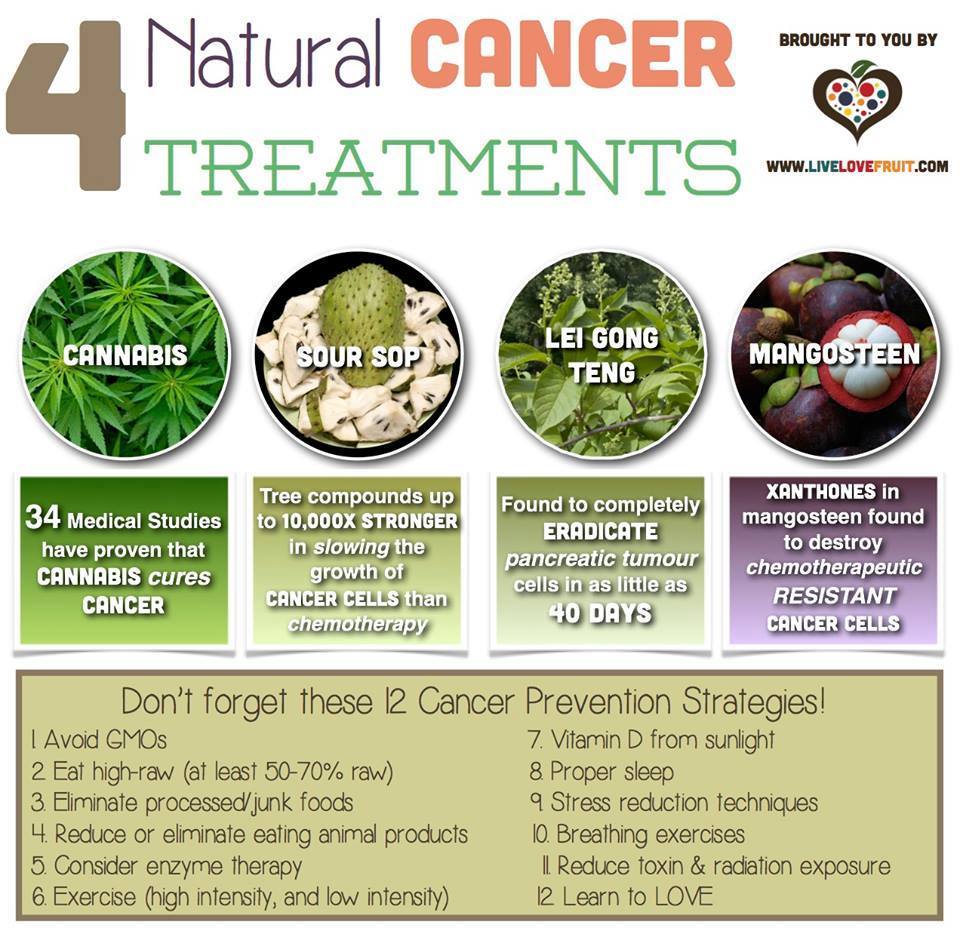
Look at this gem I came across Facebook awhile ago courtesy of Live Love Fruit, and I came the closest I have ever to that elusive rage stroke.  (It’ll happen, my friends.  It.  Will.  Happen.)

Natural Cancer Treatments

One of the many infuriating things about this graphic, disguised as health advice, is the fact that cancer isn’t just one disease.  My breast cancer isn’t the same as the skin cancer that my dad had a handful of years ago.  Hell, my breast cancer isn’t even like my friend N’s breast cancer (estrogen positive versus Her-2 positive).  When these healthy living proselytizers start sticking their heads into serious, life and death, topics they know nothing about, that’s when my blood pressure wants to reach meteoric heights.

(Also, if you learn to love, you’ll prevent cancer?  Seriously, what the actual fuck?  So if you’re shooting figurative rainbows out your eyes and pooping bouquet of roses, you’ll  prevent cancer?  Oi.  The stupid is strong with this one.)

Cancer, according to the National Cancer Institute, is defined as: “a term used for abnormal cells divide without control and are able to invade other tissues.  Cancer cells can be spread to other parts of the body through the blood and lymph systems.  Cancer is not just one disease but many diseases. There are more than 100 different types of cancer. Most cancers are named for the organ or type of cell in which they start – for example, cancer that begins in the colon is called colon cancer; cancer that begins in melanocytes of the skin is called melanoma.”

When I see graphics like this one, my first thought: what cancer are we talking about, ye ole wise Internet oncologists?  Hmm, are we talking about carcinomas, sarcomas, leukemia, lymphoma and myeloma, or central nervous system cancers?  Tell me, lady who juices and who believes Dr. Mercola is the best thing to happen to the Internet since cat videos, what cancer are you talking about?  While we are at it, please show me all your diplomas from all the medical schools you attended.

I did a quick search for natural treatments to see just how effective they are.  Here’s an abstract for a study entitled: “Alternative Therapy Used as Primary Treatment for Breast Cancer Negatively Impacts Outcomes.”  Another study: “Effect of complementary and alternative medicine on the survival and health-related quality of life among terminally ill cancer patients: a prospective cohort study.”  There are more studies out there, and this should go without saying for anyone diagnosed with cancer: discuss health plans with your team of doctors and for the love of pete, don’t take advice from people on the Internet.

I am not against alternative treatments in general.  Not at all.  I am against alternative treatments being used in place of  the standard and tried-and-true treatments.  I have heard and read that yoga, acupuncture, things of that nature, have helped loads in dealing with symptoms from treatment.  I wholeheartedly believe those who are sick and want to try different ways to lessen their pain should try to find whatever works, and I hope you are successful.

The other main issue I take with the above graphic is the use of  “prevention.”  You can’t prevent cancer.  You know what you can do, though?  You can  reduce your risk of certain cancers.  When these Internet oncologists (who, I presume, received their Internet degree after successfully completing the course: “I read one article, and now I’m an expert”) throw around the word prevent, they perpetuate the false notion that if you just follow the Healthy Living Rules, you’ll never be sick.

A very gifted blogger, Stacey, explained exactly why the distinction of “prevention vs. risk reduction vs. screening” needs to be made in this fantastic CoffeeMommy blog post:

Why is the terminology distinction important? Three reason bubble to the top for me:

Continued Diligence: Individuals must remain diligent in personal and professional screening even when they “do everything right” on the risk reduction list. Mammograms don’t “Save the ta-tas” they simply alert people as to whether or not their breasts are trying to kill them. I can personally attest to the fact that people who follow all the published rules for how to prevent breast cancer, and get a mammogram at 40, still get breast cancer.

Removing Stigma and Eradicating Blame & Shame: According to anecdotal data, the most common question lung cancer patients field is, “How long did you smoke?” If you advertise risk reduction as prevention you are perpetuating a falsehood. Perpetuating the idea that cancers are preventable implies that, when a diagnosis is given, somebody did something WRONG.

Redirecting Research Focus: While a list of ways to reduce risk for disease is helpful, such a list is not a magic bullet. Already genomic research is leading to personalized treatments. We need to expand efforts in this area. When the general public finally realizes that no one is “immune” to a cancer diagnosis, more focus can be applied in the appropriate areas.


Actors who are in the best shapes of their lives are diagnosed with cancer and die.  Athletes get cancer.  Never-Smokers get lung cancer and die.  Vegetarians also get cancer.    Oftentimes biology and/or environmental factors are too big of obstacles for a healthy lifestyle to shield you from anything bad, and you can get sick.  You cannot prevent cancer.  You can reduce your risk.   I am sorry to burst any bubble, but bad things can happen to good people, including healthy people.

Oftentimes you see these graphics, like the one above, being shared and posted by those who have never had cancer or faced any medical hardship (as a result of that, they seem to think they have the human body all figured out).  Frankly, I think it’s irresponsible and downright dangerous to be advocating for a “natural cancer treatment” when it’s not YOUR life at stake.  People have said to me, “Man, I don’t know if I could do chemo if I had cancer.  That just seems really drastic, all that poison.”

santana

My response: “Oh yeah, total poison.  Nothing good or easy about it, but man, when the doctor told me I had breast cancer, I couldn’t get hooked up to that IV quick enough.”  Let’s make a deal, internet oncologists.  If YOU come down with cancer, then you should try the natural cancer treatments, and report on how that worked out for you.  In the meantime, I’m going to listen to those in the medical field who actually do know what they are talking about.

You also see a lot of this line of thinking in social media land after you have become a sickie:

To the folks who subscribe to this paranoid Big Brother attitude, I applaud you for the privilege of not ever having been sick and needing medicine to actually stay alive or to function.  I’m not exaggerating either – needing real medicine, and not some essential oil or some fruit that people in South America supposedly do instead of chemo, to stay alive.  It must be nice.  If it wasn’t for big Pharma, I’d either have advanced disease or I’d be dead.  Who knows?  I wouldn’t be living a No Evidence of Disease life right now, and I certainly wouldn’t have run a half marathon not even a month ago.  If this makes me a so-called Big Pharma pawn or whatever it is that these theorists think I am, so be it.  I know I’ll rest easy tonight.

Half marathon…. check

I did it.  I freaking did it.

image

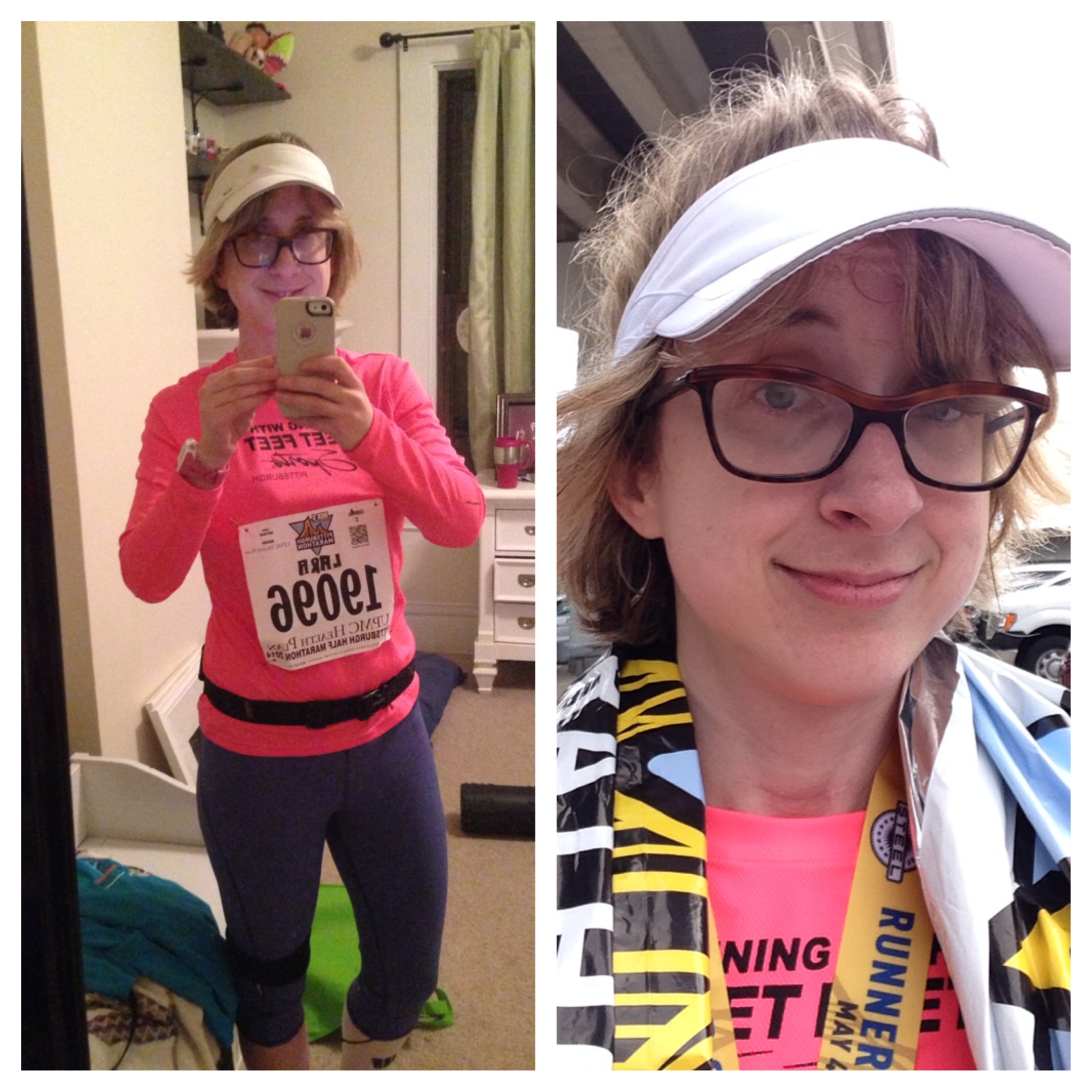
Pre-race selfie and post-race selfie


I ran 13.1 miles today, and I didn’t stop to walk.  (I did stop for water breaks, but I’m not counting that.)  I’ve been training for this day for months, basically since last October.  This time last year, I was still recovering from five surgeries over the period of two years.  I was 10 to 15 pounds heavier, and I lacked direction.  I didn’t know how to change my life and bounce back from all the crap done to me during breast cancer.  I hated what cancer had done to me physically with all my scars, weight gain and the reconstruction.

I’m now in the best freaking shape of my life.  I have never looked and felt like this, even before cancer.  I have a feeling of purpose with running.  During all my treatment, I remember how absurd it felt to hear people say to me, “Oh, you’re so strong.  You’re a fighter.”  That always struck me as odd because I had never felt so physically weak and just beat up.  Like, seriously, who was I fighting and winning?  Cancer treatment puts the patient in a very passive role.  I didn’t do anything – rather, treatment was done to me.

I feel strong now, and I have realized that I’m not strong nor was I ever strong because I had cancer.  I am now strong even though I had cancer.

During the last three or four miles of the race today, I actually started getting flashbacks to my time in the chemo ward.  I could see myself in the chair, looking out at the other patient.  I remembered that feeling of helplessness and hopelessness.  I’d snap out of that flashback and just ran harder.  Then I flashed to my hospitalization after my double mastectomy, and how much pain I felt.  I’d snap out of that, too, and ran harder.  It was like Runner Lara was running like hell away from Sick Lara, like I am finally able to put that period of life behind me (knowing damn well that it can always come back).

Nothing I can do will prevent breast cancer from ever coming back, either local or distant.  What I do today, like putting on a pair of shoes and running, is what i can do.  That’s the only control I have – this very moment.

This race was such a huge deal to me.  It was to see if I could even do it and a big fuck you to cancer.  Now it’s done and in the (Lara) record books, it’s time to move on.  I’m definitely not cancer girl anymore.

I am a runner.

Get Up Running – Kerry

I recently just “met” Kerry through another friend of mine, Michele, who has had breast cancer and runs races.   I am meeting a lot of women who’ve had breast cancer and who are also runners – awesome!  Anyway, here’s Kerry’s story.

Name: Kerry

IMG_462395857299064

Type of cancer and treatment:

Dx Oct 2008 @ 42 yrs, IDC, Stage IIIa, Grade 3   [ed note: breast cancer, for those who don’t know what IDC means – invasive ductal carcinoma]
Right Mx, no recon
FEC-T x 6
25 rads
Tamoxifen
Ooph
Arimidex (still taking)
3 years of Zometa, 2 x a year

Were you a runner before cancer?

No. I was always really active; I walked everywhere, hiked, canoed, gardened, etc, but hadn’t run since high school.

While I was in the middle of chemo, I decided I wanted to work hard at getting physically strong after I was done. Running seemed like an obvious choice. Chemo hit me quite hard. FEC made me throw up, and Taxotere gave me terrible bone pain, from which I was basically bedridden for a couple of days each round. I remember lying in bed feeling so terrible, so weak, and just wishing that I could feel strong again. I ended up hospitalized after my 5th round of Chemo (febrile neutropenia) and remember being taken from the ER up to a ward. There I was in a hospital gown, bald, IV pole, in a wheelchair, and I’ll never forget the look of pity and fear on the faces of people we passed. I never wanted people to look at me that way again.

I also did a lot of research about what I could do to increase my odds of survival, and time and time again I read that exercise would lower my risk of recurrence. It seemed like a no – brainer to prioritize exercise after active treatment ended.

I am also on an AI, one of the most common side effects is joint pain. I read one of the best ways to prevent this is, again, exercise. I do feel a difference in my body if I go a couple of days without running. I went through early menopause right after radiation, when I had my ovaries removed. I hope that running helps counter some of the negative long term cardiac effects of that, and some of the long term effects of chemo.

Did you run during treatment? How long after did you take it up?

I didn’t start running until after treatment ended. I walked during chemo, as much as I could, which towards the end was often just walking my kids to school and back. After chemo I started walking longer distances, and about 6 months after I finished up everything I started running a bit. (I live in Canada and had to wait for the snow to melt) I started off running small distances during my walks, and slowly increased how much I ran, until I was comfortably running 3 miles at a time. On a whim I decided to try and run 6 miles, which I did! Not long after that I decided to train for a half marathon, and about 7 months after starting running, (about 2 years after diagnosis) I ran my first half marathon. I have since run 2 more half marathons, and next month will run my 4th full marathon.

How has running helped you during and/or after treatment, both physically and mentally.

Physically and mentally it has made me so much stronger. I truly think running is saving my life, and my sanity.  I came out of treatment with some extra steroid weight, feeling pretty weak and hammered by everything. Emotionally I felt quite vulnerable, it is such a shocking thing to happen, and I was not particularly hopeful about my long term survival. I think that when you are in the midst of active treatment you are in fight mode, but afterwards I think running gave me something positive to focus on, like I was still doing something to fight the cancer.

I also think that having gone through some pretty aggressive treatment, that cancer has helped me as a runner. I have often thought during a hard run, if I can get through chemo, I can get through this. I think it has given me the strength to not quit when the going gets tough.

What did your doctor say about your running?

My onc says it’s the reason I am doing so well. He is totally supportive.

What is your biggest challenge running after cancer?

Ha, well, I didn’t have recon, and sweat and a silicone prosthesis don’t mix! I had a couple of near embarrassing situations before switching to a foam prosthesis. It makes me look a bit lopsided if you looked closely, but I really don’t care.

I have had bursitis twice in my heels which I blame (possibly unfairly) on Arimidex.

I also have had occasional hand lymphedema after very long runs.

What would you say to someone just out of treatment who may be intimidated to take up running?

Well, I would say to start slow. You don’t have to be out running marathons. There is a huge benefit of just exercising for 30 minutes a day. Consistency is the most important thing. Start out with an easy, non-threatening plan, something like couch to 5k. Don’t worry about speed, don’t be afraid to walk. Just get out there and do something. Think of exercise as a key part of your treatment plan, the survival benefit is similar to chemo. And it’s far more fun 😉

IMG_462350052611564

Get Up Running – Marjie

Welcome to the inaugural post for what I hope can become an inspirational series about running during and/or after cancer – Get Up Running.  This should go without saying but if you’re recovering from cancer and want to start running, clear everything with your doctors beforehand.

My first friend to respond to my inquiry was Marjie from Pink and Pearls.  This woman has the kindest soul I have ever encountered, and I am so privileged to count her as a friend.

Name: Marjorie Miller

finish

Type of cancer & your treatment: 

Breast cancer; surgery (I also had childhood Leukemia at the age of 12, and for that, three years of chemotherapy).

Were you a runner before cancer or any other sports before cancer?

I ran my first 5K literally the same day I found a breast lump. (race that morning, found the lump in the shower that afternoon). I started running a few months before diagnosis, but was never a runner before cancer.

Did you run during treatment? If no, how long after treatment ended did you take up running?

Yes, I tried to run in between surgeries. I had six total surgeries, including a double mastectomy with reconstruction and lat flap. After each surgery when I got the go-ahead from my doctor to resume physical activity, I attempted to run again. It didn’t always happen with the expanders but I tried.

How has running helped you during and/or after treatment, both physically and mentally?

Mentally it helps me feel like I have control over my body again. It helps me feel in control of my health and my life. Breast cancer took my breasts but it can’t take what I do with my body, which is running. When I run it’s just me and my body; I have complete control. I take myself as far as I want. I push myself as much as I can. Nobody else gets a say when I lace up my sneakers. Physically it’s made me stronger and healthier. It gives me so much self confidence. It gives me energy, helps me deal with stress and anxiety, and I feel it keeps me sane 😉

What did your doctor/doctors say about you running?

They applaud it and encourage it.

What has big your biggest challenge running after cancer?

Being comfortable with the implants. My chest still feels tight and I am still regaining muscles under my chest wall. Running sometimes hurts and pulls at my chest.

What would you say to someone ending treatment or just out of treatment who might be intimidated to take up running?

Take it slowly. Take it one day at a time. Start with what YOU feel comfortable doing. Remember: when you run, you run for you and nobody else. My husband said to me before my first 10 miler a few weeks ago: “Just run YOUR race.”

You’re only running for yourself. Not to impress anyone else. Start with walking, slow jogging, taking breaks, whatever you need. You’ll find with time your energy and stamina will grow. Your confidence will grow. It does get easier and the more you do it, the more you love it.

Run happy!

run

11 Miles

On Sunday, I accomplished something I never thought I could do – I ran 11 miles in two hours and three minutes.  When I began Fleet Feet’s No Boundaries program last July, I wasn’t even sure if I could run a 5K.  I thought to myself, “Okay, you signed up.  That’s the first step.”  I ran the Pittsburgh’s Great Race 5K in 31 minutes, and I was so proud of myself afterward.  When I saw that Fleet Feet was offering a training program for either the half marathon or full marathon, I hemmed and hawed about it for days.

No way I can run 13.1 miles.  You are out of your damn mind.

After I shook those “I can’t” thoughts out of my head, I signed up for the training group, and I have no idea why I ever thought I couldn’t do this.  Now that I have an 11 mile run under my belt, I know that I can run the Pittsburgh Half Marathon this May 4.  I am going to do it.  Even more so, I am going to run the Pittsburgh Half in two hours.  That’s my goal.  Whether or not I meet that goal, I’m going to be proud that I crossed that finish line.

Cancer is something that my body does.  Running is something I choose to do.

When I cross that finish line in just over a month, I hope my mother is looking down from wherever she is, shouting, “HUFFMAN RULES.”